

Flat roof repair and replacement in San Jose
Quick answer
Flat and low slope roofs shed water differently from pitched roofs, so they need different systems and careful detailing at seams and drains. Golden Sky Roofing Inc, led by Jose Dominguez, repairs and replaces flat roofs in San Jose and matches the system to the condition of the roof. We hold CSLB #1160249, Class C-39, and the estimate is free.
A flat roof depends on its drains, seams and flashing to get water off the surface. Jose Dominguez has worked in construction since 2000. Read Jose’s story.
Why flat roofs fail
A flat roof is not truly flat. It has a slight slope toward drains or edges, and its job is to move water off the surface. Most flat roof problems come down to water that stays where it should not.
- Ponding water. Water that sits on the roof for long stretches puts constant stress on the surface and speeds up wear.
- Seam failure. Seams and overlaps are common weak points on a flat roof, because they are where separate pieces meet and where movement, sun and standing water do the most work.
- Drainage problems. Blocked or poorly placed drains and scuppers keep water on the roof.
- Flashing trouble. Edges, parapet walls, curbs and penetrations all need sound flashing.
- Surface wear. Sun and weather wear down the membrane or coating over time.
- Punctures and foot traffic. Equipment, tools and regular foot traffic can damage a flat roof surface.
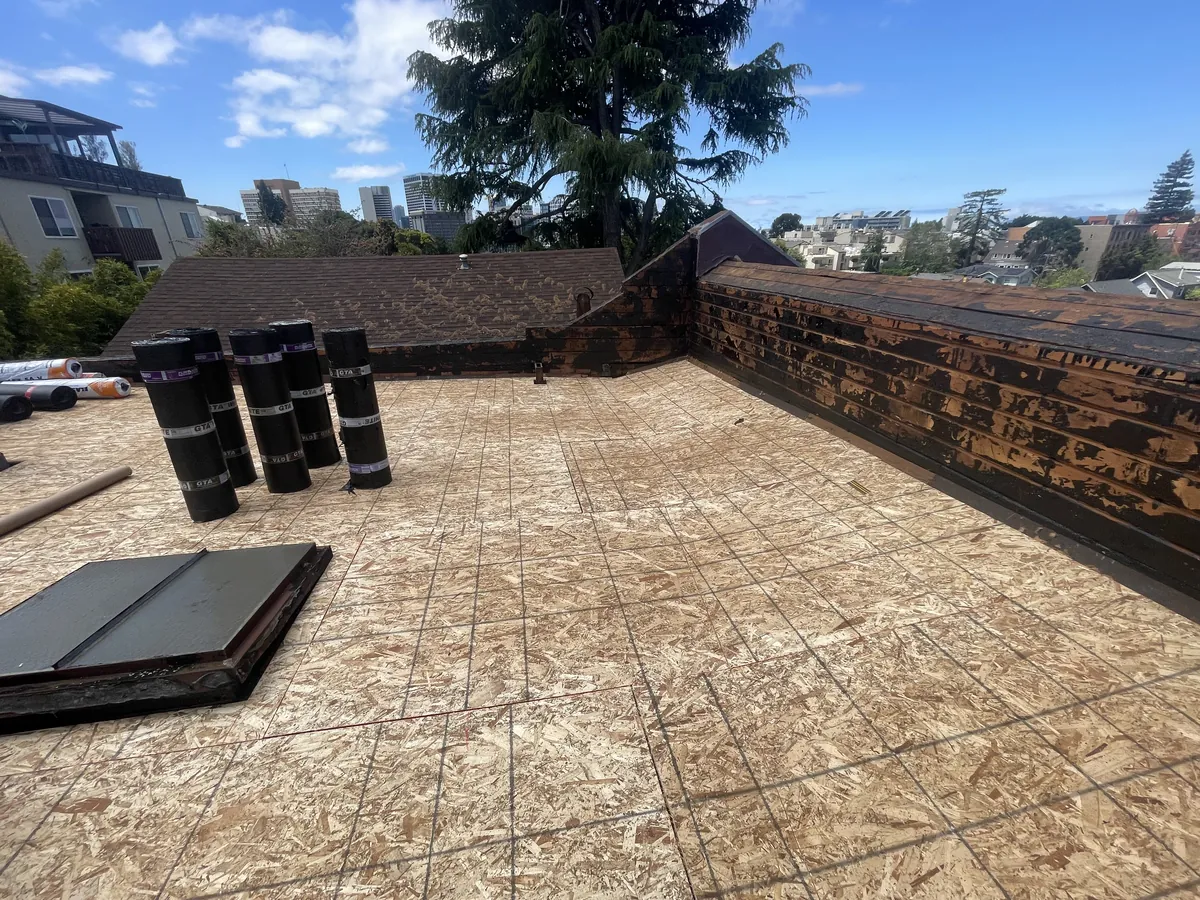
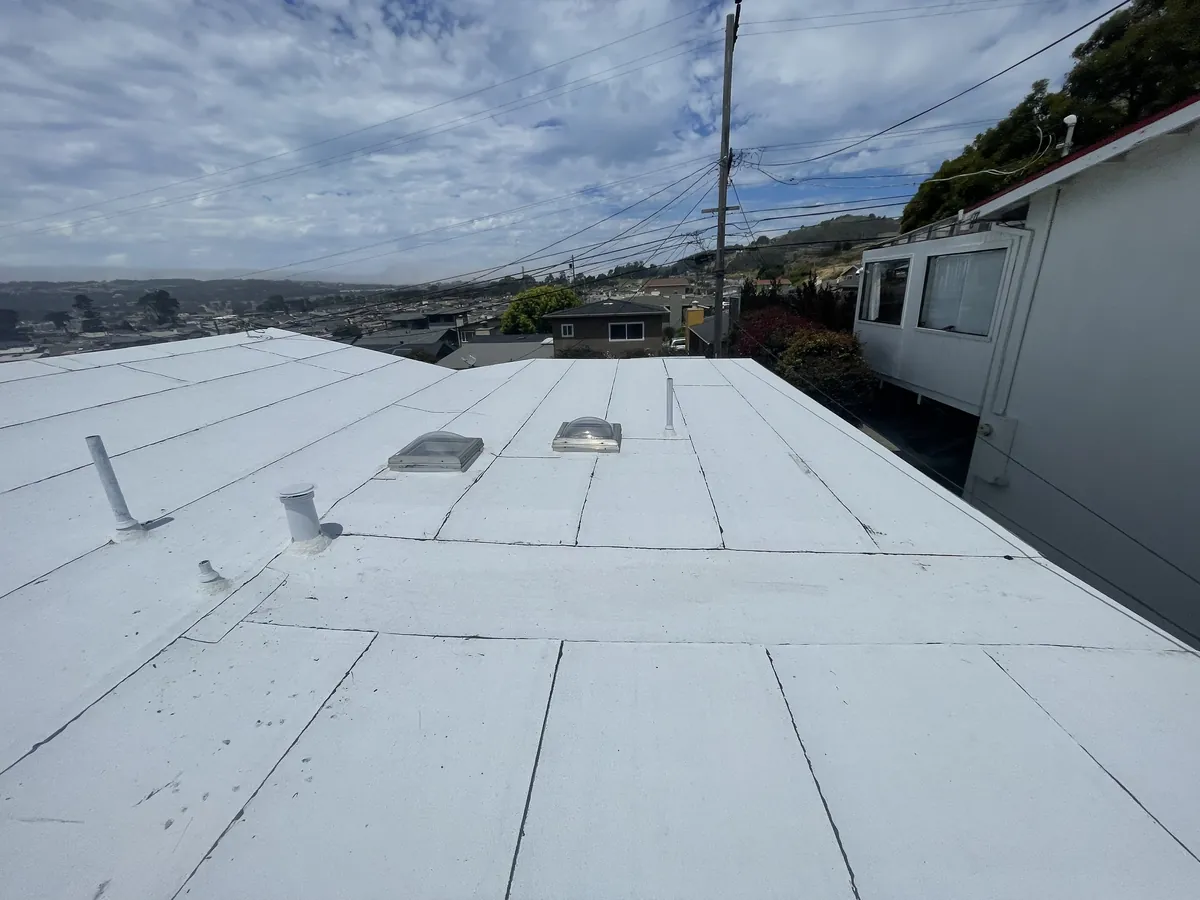
How a flat roof drains
Because there is little slope, flat roofs depend on their drainage details. Water flows toward interior drains, edge scuppers or gutters. If a drain is clogged or sits higher than the surrounding roof, water collects around it. Low spots form where the structure has settled or where an earlier repair raised part of the surface.
When we look at a flat roof, we check where the water goes and where it stays, because the answer shapes the repair, restoration or replacement decision. A roof that drains well can tolerate small flaws for a long time. A roof that holds water tends to show every weakness sooner, which is why drainage is one of the first things we raise at the estimate.
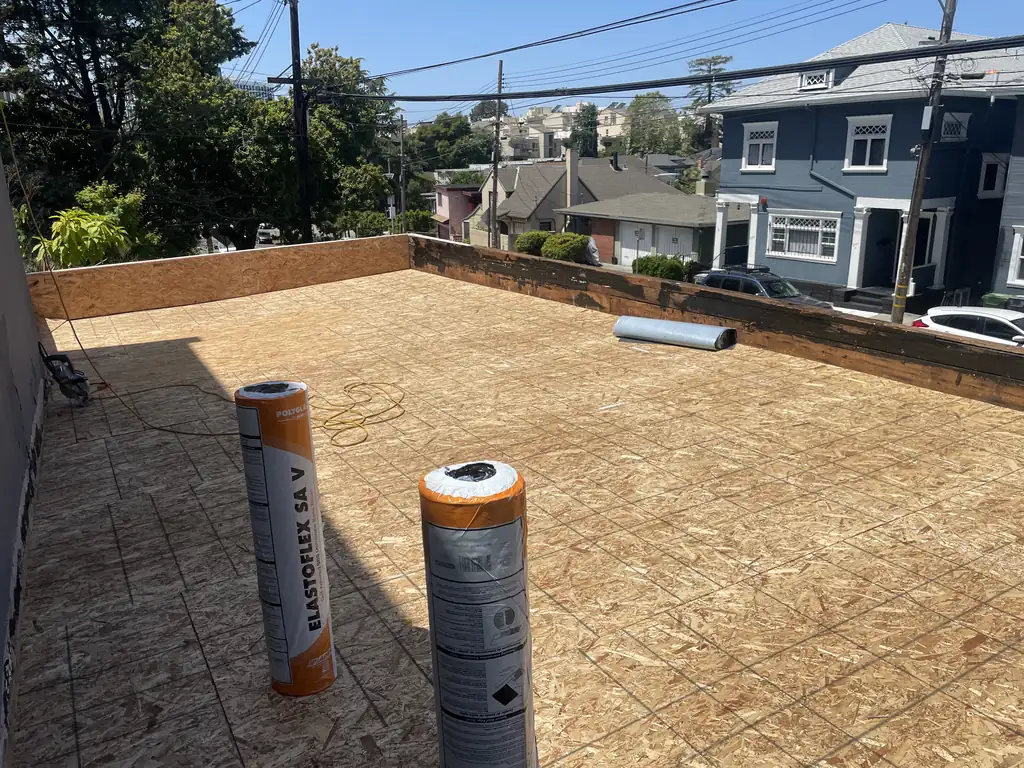
From the deck up
Membrane staged on a new deck
A flat roof starts with a solid deck. Once it is ready, the roofing membrane goes on over it.
Get a free estimateFlat roof repairs we handle
- Re-sealing and repairing failed seams and overlaps
- Patching punctures, cracks and damaged areas of the surface
- Repairing or replacing flashing at edges, walls and penetrations
- Addressing drainage trouble spots where water collects
The repair that follows is matched to what we find, using whichever of the systems below fits your roof.
Repair, restore or replace: how to decide
Not every aging flat roof needs a full tear-off. The choice usually comes down to condition:
- Repair fits isolated damage on an otherwise sound roof.
- Restoration with a coating can suit a roof that is worn but sound. See silicone coating for when it fits.
- Replacement fits roofs with widespread failure or damage underneath the surface, such as wet insulation or a deck that has been compromised.
A coating over wet insulation seals the problem in, so we find out what is under the surface before recommending one. We look at the roof in person and recommend the option that makes sense, including the simpler one when it will hold up.

The finished roof
A clean white flat roof
Flat roofs on homes and larger buildings need clean seams and careful detail work at vents and edges.
Get a free estimateFlat roof systems we install
Torch down. A layered replacement system.
Silicone coating. A restoration option for a worn but sound roof.
TPO. A membrane replacement system.
Each has its own strengths, and the right choice depends on your roof, how it is used, and what you want from it. We go through the options at your estimate and do not rank one above the others without seeing the roof.
Flat roofs on homes and larger buildings
Flat and low slope roofs are most common on commercial buildings, though some homes have a flat section over a porch, an addition or a garage. The systems are the same; the scale and access are different, and drains and edge details usually decide how a flat roof performs. For businesses, building owners and property managers, see our commercial roofing services.
Signs to watch for on your own flat roof
You can catch many flat roof problems early without climbing up. Look for water that is still standing a day or two after rain, stains or sagging in the ceiling below, bubbles or blisters in the surface where it is visible from a window, cracked or lifting edges, and debris collected around drains. Tell us what you see when you call. It helps us arrive knowing what to look for.
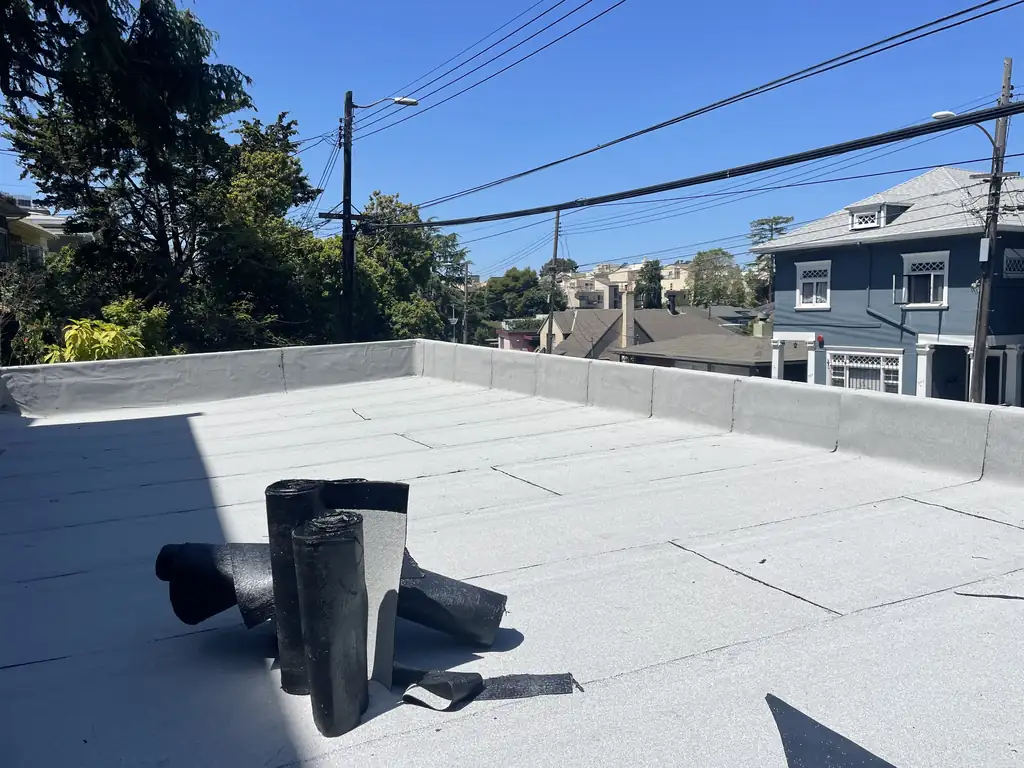
The finished roof
Finished surface and vent detail
What the estimate covers is explained before work starts, and the details are in your written proposal.
Get a free estimateWhat the estimate covers
The estimate is free and starts with a look at the surface, seams, drains, flashing and edges. We note any signs of trapped moisture, measure the roof, and discuss the options. You receive a written proposal with the scope and price. Repairs are typically scheduled for the same day or the next day once the work is approved; larger flat roof jobs follow the schedule in your proposal. See our process.
Warranty
Golden Sky Roofing Inc provides a 5 year workmanship warranty, plus the manufacturer’s limited product warranty on materials. Terms are in writing before work starts. See how the warranty works.
Flat roofing FAQ
Free estimate
Get a free flat roof estimate
Call (408) 315-1929 for a free estimate. Monday to Friday, 8:00am to 5:00pm. Se habla español.
Related pages: commercial roofing, roof repair, roof replacement, contact.